
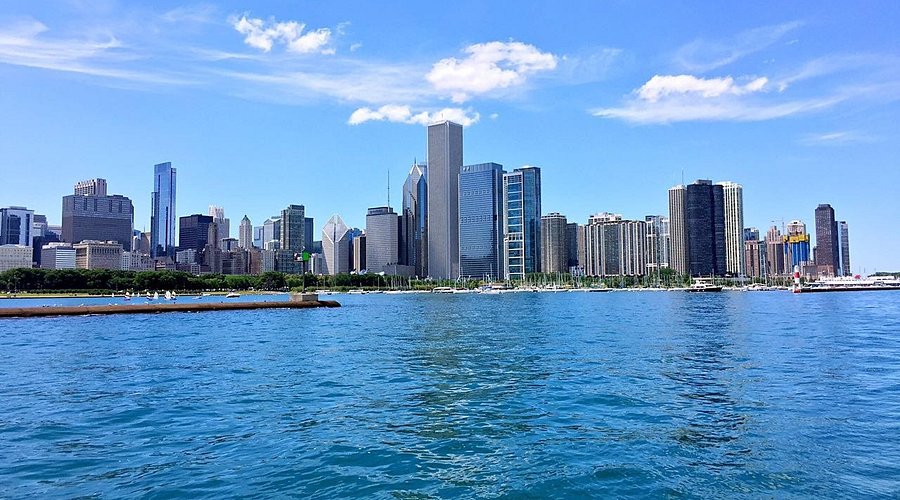
Why Washington Is a Different Kind of SEO Market
Most cities have one primary search audience. DC has several operating at the same time, and they behave very differently from each other.
You’ve got local residents searching for services the same way people do in any major city. You’ve got federal employees and government contractors searching for vendors, consultants, and specialized service providers. You’ve got a constant rotation of political staffers, lobbyists, and advocacy organizations that need professional services fast. And you’ve got a significant tourist and transient population that generates its own search patterns in hospitality, dining, and retail.
A generic SEO strategy doesn’t account for any of that. Local SEO companies in Washington that treat DC like they’d treat Indianapolis are going to underperform — not because SEO doesn’t work here, but because they’re not building for this specific market.
We account for DC’s audience complexity from the start. That shapes how we do keyword research, how we structure your content, which neighborhoods and suburbs we build location pages around, and how we position your business against the specific types of competitors you’re actually up against.
What the Local Search Numbers Tell You About the Opportunity
Month-by-Month: What to Expect From DC SEO
- Full audit complete. Technical issues fixed. Keyword and competitor research delivered. Foundation is set — no visible ranking changes yet.
- First service and location pages drafted and published. Internal linking structure built. GBP optimization complete if applicable.
- Additional content live. Citation cleanup underway. Early ranking movement on lower-competition terms. Impressions increasing in Search Console.
- Clearer ranking improvements across target pages. Organic traffic beginning to trend upward. Link acquisition delivering first results.
- Meaningful organic traffic growth. Inbound leads from search increasing. Competitive DC terms moving onto page one.
- Consistent organic lead flow. Ongoing content and link work extends rankings into new keyword clusters. ROI is clear and measurable.
PRABLAY MARKETING
What Working With Prablay Marketing Actually Looks Like

Full technical SEO audit and implementation. We don’t hand you a report and leave the fixes to you. We identify the issues and we fix them.
Keyword research specific to Washington DC. We map the full search landscape for your business in this market — volume, intent, competition level, and the gap between where you rank now and where you need to be. This shapes every content decision we make.
Content development. We write and publish the pages your site needs to rank — service pages, location pages, comparison content, and supporting articles. Written for DC audiences, structured for Google, and copy that actually converts the people who land on it.
Link acquisition and authority building. Earned, legitimate links from relevant sources. No shortcuts that create ranking gains today and penalties later.
Monthly reporting tied to business outcomes. You get a report every month that shows your keyword ranking changes, organic traffic trends, and lead volume from search. We connect what we did to what moved — you’ll always know what you’re getting.
Three Things Washington Businesses Need to Win in Organic Search
Technical SEO isn’t glamorous, but it’s the difference between a site that ranks and one that never will regardless of how good the content is. In DC’s competitive landscape, ranking on page one requires that Google trust your site completely — and trust starts at the technical level.
We run a full crawl and audit before anything else. Here’s what we’re looking at:
Page speed and Core Web Vitals. Google uses real performance data to rank pages. A slow site in a market as competitive as DC doesn’t get the benefit of the doubt — it just doesn’t rank. We identify exactly what’s making your pages slow and fix it, whether that’s image optimization, render-blocking scripts, server response time, or caching configuration.
Crawl efficiency and indexation. If Google’s crawlers are wasting budget on pages that don’t matter, the pages that do matter get crawled less frequently. We audit your crawl budget, clean up orphaned pages, fix redirect chains, and make sure Google is spending its attention on the pages you actually want to rank.
Duplicate content issues. Common across sites that have been through platform migrations, redesigns, or have grown organically over time without a clear URL strategy. Duplicate content confuses Google about which version of a page should rank — and the result is usually that neither version ranks well.
Schema markup. Local Business, Service, FAQPage, and other structured data schemas tell Google — and AI-powered search tools like Perplexity and ChatGPT — exactly what your business does, where it’s located, and what questions it answers. Without schema, you’re relying on Google to infer all of that from your content, which it often gets wrong.
Mobile and HTTPS. Non-negotiable in 2025. A site that isn’t fully mobile-optimized and secured with HTTPS is already starting behind every competitor that is.
We fix the technical issues first. There’s no point investing in content or links if the foundation isn’t solid.
A lot of what passes for SEO content is just blog posts chasing informational traffic that never converts. Someone reads an article, leaves, and never comes back. The page technically gets traffic but produces zero business outcomes.
We build content around searches that signal someone is ready to act — contact a firm, book a service, request a proposal, walk into a location. For DC businesses, that means:
Deep service pages. Each service you offer needs its own page with enough depth and specificity that Google sees it as a genuine resource. A paragraph and a phone number doesn’t rank in DC. We write service pages that actually answer the questions DC customers are searching with.
Location pages that go beyond city-level. DC’s metro area includes Alexandria, Arlington, Bethesda, Silver Spring, Tysons, Reston, and a dozen other areas where your customers live and search. Each of those needs a location page built specifically for it — not a template with the city name swapped in. We write location pages that speak to those communities directly and rank for the neighborhood-specific searches that drive calls and contact requests.
Comparison and decision-stage content. DC’s professional and government audiences do more research before making a vendor decision than the average consumer. Content that helps them compare options, understand what to look for, and evaluate providers positions your business at exactly the right moment — when they’re getting close to making a decision.
Supporting content for topical authority. Google ranks businesses that demonstrate real expertise in their category. A cluster of well-written, accurate content around your core topic tells Google you’re the real thing, not a thin site that just has the right keywords on the homepage.
In Washington DC, content quality alone isn’t enough to rank for the terms that matter. Your site needs authority — external signals that tell Google other credible sources trust and reference your business.
In a city with as much online media presence as DC — local news, policy publications, industry trade outlets, think tanks, associations — there are real opportunities to build authority through legitimate means. We pursue those opportunities through:
Digital PR and editorial placements. Getting your business mentioned and linked from DC-area publications, industry outlets, and relevant online communities. These aren’t paid placements or directory spam — they’re earned links that reflect genuine credibility.
Local citation consistency. Your business name, address, and phone number need to match exactly across every directory where your business appears — Google Maps, Bing Places, Apple Maps, Yelp, and any industry-specific directories relevant to your category. Inconsistencies are a trust penalty that compounds quietly in the background.
Partner and association links. DC has a dense network of business associations, chambers of commerce, and industry groups. We identify which ones are worth pursuing for your specific business and make sure you’re listed and linked from the ones that carry real authority.
Competitor backlink gap analysis. We look at where your top DC competitors are getting their links and identify which of those sources represent realistic acquisition opportunities for your business. This gives us a target list rather than a guessing game.
Washington Industries: Where Local SEO Moves the Needle Most
Legal Services
Personal injury, immigration, criminal defense, employment law, government contracting law — DC's legal market is one of the most competitive in the country for local search. We build content and authority strategies around practice areas and geographic focus that differentiate your firm from the dozens of competitors showing up for the same searches.
Restaurants and Hospitality
DC's food scene is nationally recognized, which means the competition for local search visibility is intense. We build local SEO strategies that account for both DC residents and the high-volume tourist and business travel traffic that flows through the city.
Healthcare and Medical Practices
Primary care, dental, specialty practices, behavioral health — DC's healthcare market is dense, and patients use Google to find and evaluate providers before they ever make an appointment. We build local SEO strategies that get your practice in front of patients at the moment they're looking.
Thanks to Prablay Marketing’s local SEO strategies, our store now ranks at the top for searches in our area. We’ve seen a noticeable increase in foot traffic and local inquiries within weeks.
Director

FAQ
FREQUENTLY ASKED QUESTIONS
Washington DC SEO Services: Questions We Hear From Businesses
DC’s search audience is more professionally oriented and research-driven than most cities. Decision-makers — whether they’re hiring a contractor, choosing a law firm, or selecting a vendor — do more Google research before making contact. That means content depth matters more here than in markets where people search and call immediately. It also means DC’s B2B and government contracting search landscape has its own keyword ecosystem that requires specific expertise to navigate.
A few things consistently. First, treating the DC metro as a single market instead of building location-specific content for DC proper, Northern Virginia, and suburban Maryland separately. Second, optimizing for traffic volume instead of search intent — chasing high-volume informational searches that bring visitors who never convert. Third, ignoring the bilingual and multicultural dimensions of DC’s neighborhoods, particularly in Ward 1, Columbia Heights, and other areas with significant Spanish-speaking populations. And fourth, over-relying on technical fixes without building the content depth and authority that competitive DC rankings actually require.
For most DC businesses, you’ll see measurable movement — improved rankings on secondary terms, increased organic impressions — within 60 to 90 days of proper technical and content execution. Meaningful traffic growth and a consistent increase in leads typically comes in months 3 to 5. Highly competitive terms in categories like legal and healthcare may take 6 to 9 months to reach page one. We’ll give you a realistic timeline for your specific market position after reviewing your site and competitive landscape.
Ads and SEO serve different purposes. Ads give you immediate visibility — the moment you turn them on, you’re in front of people searching. But the moment you turn them off, you disappear. SEO builds visibility that compounds over time and doesn’t reset to zero when you stop a campaign. Most DC businesses that have relied entirely on paid search end up in a position where they can’t turn the ads off because there’s nothing else driving leads. SEO is how you build the alternative — and eventually reduce your dependence on ad spend.
Yes. Government contractor and federal services SEO has its own search landscape — different keyword patterns, different content requirements, different trust signals than consumer-facing local SEO. We’ve built content strategies around capability-focused searches, contract vehicle queries, and the research behavior of contracting officers and program managers. If your business is oriented toward the government market, we know how to approach your SEO accordingly.
Three checks. Are you ranking on page one in Google for the two or three searches that most directly describe what your DC business does? Is your organic traffic trending upward over the past six months — not just holding flat? Are you receiving inbound leads from Google search that you can attribute to organic results rather than referrals or ads? If you’re failing two out of three, your current SEO investment is not performing the way it should. A free audit will tell you exactly what’s happening.